
Five Ideas for Concrete Wall Dividers
From the garden to the poolside, the terrace to the entrance hall: five ways to use perforated concrete block dividers in your space.
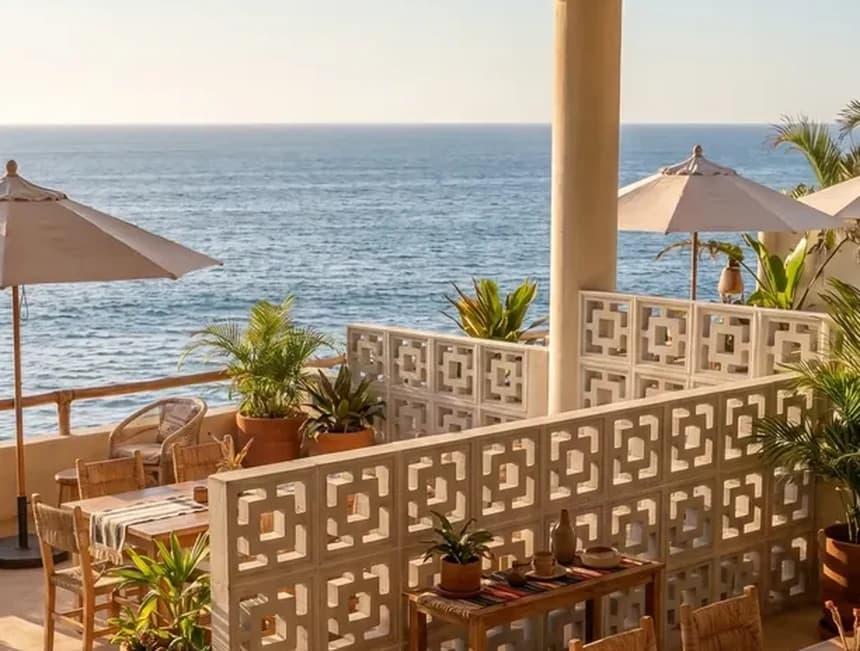
Dividing a space does not always mean making it smaller. The right divider separates an area while keeping light, air and sightlines flowing; often it becomes the signature of the room. Here are five ideas to consider when thinking about perforated concrete block dividers.
01. A Boundary That Frames the Greenery in a Garden
Using a perforated block instead of a solid wall along a garden boundary preserves the relationship between plants and light, and makes the edge feel less severe. Combined with climbers or low shrubs, the block gradually reads as part of the greenery.
02. A Semi-Transparent Partition Indoors
To separate a living room from a dining area, or a meeting corner in an office, a block partition instead of a full wall divides spaces without cutting off light and sound entirely. It works both floor to ceiling and at half height.
03. A Windbreak and Privacy on Terraces and Balconies
On upper-floor terraces, breaking the wind and gaining privacy from the neighbours are usually wanted at the same time. A perforated block solves both: it slows the wind and blocks direct sightlines without creating a sense of enclosure.
04. A Play of Light by the Pool
A divider wall by the pool becomes almost a second decorative element as shadow patterns fall on the water throughout the day. Add lighting behind it in the evening and the effect carries into the night.
05. A Welcome Wall at the Entrance
In layouts where you do not want the whole home visible the moment the door opens, a short block wall creates a sense of threshold while showing the light behind it, making the space inviting.
All five ideas share one thing: a divider does not have to narrow the space it splits. With the right pattern in the right place, it can join as much as it separates.